Your phone rings at 9pm on a Tuesday. A homeowner just found a slow leak under their kitchen sink. They are not going to call back in the morning. They are going to call the next plumber on the list until someone answers. The question is: who is answering your phones right now?
For most small businesses the answer is nobody. Calls roll to voicemail after hours, during lunch, on weekends and whenever the team is slammed. Small businesses lose the lead and a competitor gets it.
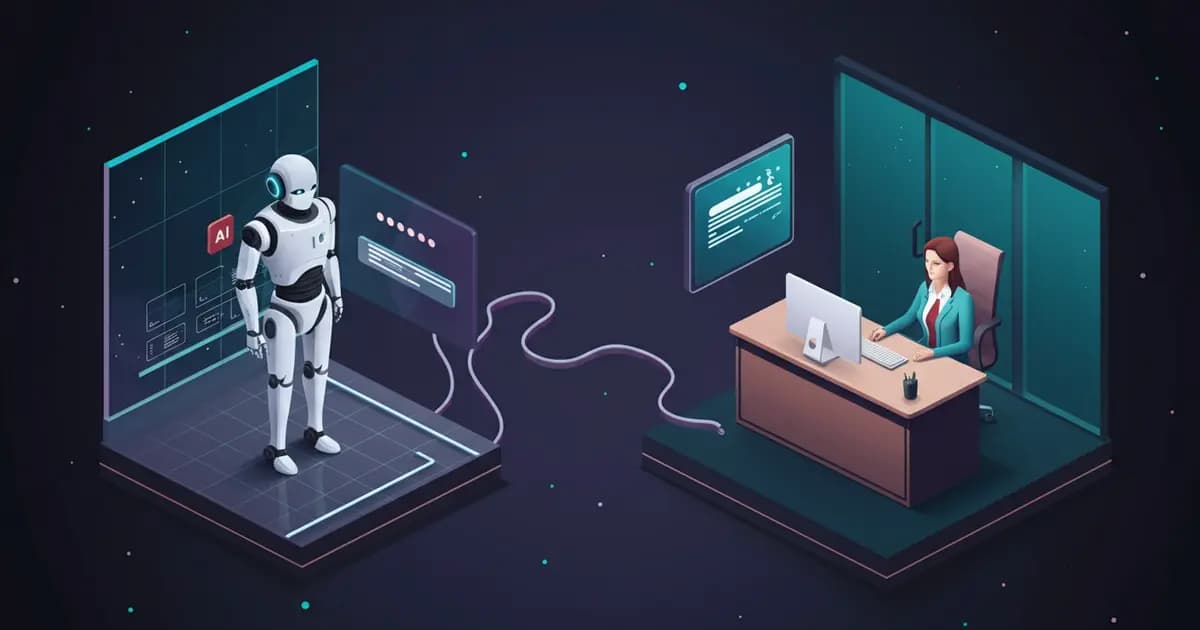
Two real solutions exist: a live answering service staffed by human operators or an AI receptionist powered by natural language processing. Both deliver call answering coverage 24/7. Both are dramatically better than voicemail. But they work very differently and which is best for your business depends on your business type, call volume and budget.
This guide breaks down exactly what each option does, what it costs, where each one wins and how to choose. No fluff and no hard sell.
What Is a Live Answering Service? Understanding Traditional Answering Systems
A live answering service is a third-party company that employs real human operators. essentially a remote live receptionist or front desk staff. to answer calls on behalf of your business. You forward your number to their call center and their agents pick up, follow a script you provide and either relay messages or route calls based on your instructions.
The model has been around since the 1960s and the core experience is largely the same today. A human picks up, reads from a screen and takes a message. Some services have specialized operators trained in medical terminology, legal intake or real estate so they can handle slightly more complex conversations.
How Live Answering Services Typically Work
- You forward calls to the service when you are unavailable
- An operator answers with your business name and follows your custom script
- They take caller information, ask intake questions or transfer urgent calls
- You receive messages via text, email or app notification
- Billing is usually based on minutes used per month
Most live answering services do NOT integrate with your CRM or scheduling software. They collect information and send it to you. Your team then has to manually enter it, call the person back and book the appointment. That lag creates friction and costs you booked jobs.
What Is an AI Receptionist? AI Virtual Receptionist and AI Answering Service Explained
An AI receptionist is a voice-based AI agent that handles inbound phone calls using natural language processing. It speaks with callers in real time, understands what they need, answers questions, books appointments and routes or escalates calls when appropriate.
Modern AI receptionists are far removed from the clunky phone trees of the 2000s. They do not say "press 1 for sales." They have a natural conversation, understand context and can handle multi-turn dialogue where the caller asks follow-up questions or changes what they want mid-call.
Unlike a live answering service, an AI receptionist typically integrates directly with your calendar, CRM and job management software. It does not just take a message and hand it off. It acts as a fully automated answering service. booking the appointment, logging the lead and sending confirmations all within the call. This lets businesses automate their entire virtual phone answering workflow without adding headcount.
How an AI Receptionist Typically Works
- AI answers every call within 1-3 rings, 24 hours a day and 7 days a week
- Caller speaks naturally, AI understands intent without requiring specific phrasing
- AI answers FAQs, quotes pricing ranges, confirms availability and books appointments
- Integration with your calendar blocks time slots in real time so double-booking is impossible
- Complex calls or upset callers are escalated to a human or sent to voicemail with a transcript
- Every call is recorded and transcribed for quality review
AI receptionist vs virtual receptionist: these terms are often used interchangeably but they are different. In the AI vs human debate for front desk coverage, a virtual receptionist is typically a human working remotely. essentially the same as a live answering service operator. An AI receptionist is fully automated software. When evaluating vendors, always confirm whether a human is on the other end of the call.
AI Receptionist vs Live Answering Service: Full Comparison of Both Automated Systems
Here is how these two phone answering solutions stack up across the factors that matter most to small business owners.
| Factor | AI Receptionist vs Live Answering Service |
|---|---|
| Monthly cost | AI: $99 to $500/mo vs Live: $200 to $1,500/mo |
| Availability | AI: 24/7/365 with zero holidays vs Live: 24/7 but staffing gaps possible on holidays |
| Answer speed | AI: 1 to 3 rings every time vs Live: 3 to 6 rings depending on queue |
| Accuracy | AI: Consistent every call vs Live: Varies by operator skill and attention |
| Scalability | AI: Handles unlimited simultaneous calls vs Live: Queue builds during high volume |
| Hold times | AI: No hold times ever vs Live: Callers can wait during busy periods |
| Languages supported | AI: 30 to 100+ languages depending on platform vs Live: English plus additional at higher cost |
| CRM and calendar integration | AI: Native integration, books appointments live vs Live: Usually message-only, manual entry required |
| Training time | AI: Setup in 1 to 3 days, updates instantly vs Live: 1 to 2 weeks for script changes |
| Consistency | AI: Identical quality on every call vs Live: Varies by operator, time of day and fatigue |
| Personalization | AI: Uses caller data from CRM to personalize vs Live: Limited to what is on the script |
| Complex or emotional calls | AI: Handles well but escalates when appropriate vs Live: Humans excel at empathy and nuance |
Key Takeaway
The comparison table above reveals a consistent pattern: AI solutions win on operational factors (cost, speed, scale, consistency) while live answering services win on human touch factors (empathy, nuanced judgment, handling distressed callers). Understanding your business needs determines which category matters more.
Cost Comparison: What You Actually Pay
Cost is where the gap between these options becomes very clear. Both services use different pricing models which makes direct comparison tricky. Here is how the math works in practice.
Live Answering Service Pricing
Most live answering services charge by the minute. Typical rates run from $0.75 to $1.50 per minute. A business receiving 100 calls per month with an average call length of 2.5 minutes would use 250 minutes and pay $188 to $375 per month at those rates.
Watch for overage fees. Live answering services often cap your monthly minutes and charge significantly more per minute above the threshold. A busy month can turn a $300 plan into a $700 bill. Always check what happens when you exceed your allocation.
AI Receptionist Pricing
AI receptionist platforms typically charge a flat monthly fee or a usage-based rate per minute of call time. Because there is no human labor involved the per-minute cost is far lower.
average cost savings when businesses switch from live answering to AI call handling
Multiply Revenue client data, 2025For a concrete example: a roofing company receiving 150 calls per month was paying $820 per month to a live answering service. They switched to an AI receptionist at $347 per month. Annual savings: $5,676. The AI also booked appointments directly which eliminated 3 hours per week of manual follow-up from their office manager.
Where the AI Receptionist Clearly Wins for Your Business
Speed and Always-On Coverage
An AI receptionist answers in 1 to 3 rings every single time. It does not matter if it is 2am on Christmas, if 12 people call at once or if your team is handling a job site emergency. Every call gets answered immediately. Live answering services can queue calls during high volume periods and experience staffing gaps on major holidays.
of customers who contact a business choose the first company that responds
Harvard Business Review Lead Response StudyConsistency and Accuracy
Human operators have good days and bad days. They misread scripts, mishear names, forget to ask key qualifying questions and give inconsistent answers about pricing or availability. An AI receptionist says exactly what you trained it to say on every call. If your service area does not include a specific zip code the AI will tell every caller the same accurate answer without guessing.
Direct Booking and CRM Integration
This is the single biggest operational advantage of an AI receptionist over a live answering service. When an AI books an appointment it writes directly to your calendar and creates a lead record in your CRM. The caller gets a confirmation text. No message relay. No callback loop. No manual data entry.
One HVAC company reduced their lead-to-booking gap from 4.5 hours (live answering + manual callback) to under 3 minutes (AI books directly on the call). Their no-show rate dropped 31% because confirmations went out instantly. See how [AI customer service](/services/ai-customer-service) works for service businesses.
Scalability Without Extra Cost
A live answering service charges you for every minute of every call. During a promotion, a storm surge or a seasonal rush your bill goes up proportionally. An AI receptionist handles 3 calls or 300 calls at the same monthly rate. For businesses with unpredictable call volume this matters enormously.
Where Live Answering Services and the Human Touch Still Win
Empathy and Emotional Situations
A caller who just discovered a burst pipe at midnight is scared and stressed. A caller reporting a loved one's fall to a senior care line is distressed. A caller disputing a billing error they think is fraudulent is angry. In these moments a calm human voice with genuine empathy performs better than an AI.
Well-trained AI systems can de-escalate conversations and show empathy in their language but the human touch a live receptionist brings to these calls carries a weight that AI has not fully replicated for the most sensitive call types.
Highly Complex or Non-Standard Calls
AI receptionists handle the majority of inbound calls exceptionally well for standard business inquiries. But every business has a small percentage of calls that fall outside any predictable script: multi-party legal situations, complex insurance claims, callers with significant hearing impairments or highly technical questions that require judgment.
Live operators can think on their feet, ask clarifying questions beyond a script and make judgment calls. A good AI system will escalate these calls appropriately but the human operator handles them directly.
Older Callers Who Prefer Human Interaction
This is a real demographic consideration. Industries serving a predominantly older customer base (senior care, certain medical practices, estate planning law firms) may find that their callers are less comfortable with AI and more likely to hang up if they sense they are not speaking with a person.
Practical note: modern AI receptionists are very convincing. Most callers do not realize they are speaking with AI unless the system identifies itself. Whether or not to disclose that the receptionist is AI is an ethical and sometimes legal consideration that varies by industry and jurisdiction.
Industry-by-Industry Recommendations: What AI Solutions Are Best for Your Business
There is no single right answer for every business. Here is a practical breakdown by industry based on typical call types, caller demographics and what matters most operationally.
| Industry | Recommended Approach and Why |
|---|---|
| HVAC, Plumbing, Electrical | AI receptionist. High call volume, standard intake questions, appointment booking critical. Speed wins jobs. |
| Roofing and Exterior Services | AI receptionist. Storm surges create volume spikes that live services cannot handle cost-effectively. |
| Dental and Orthodontic | Hybrid. AI for after-hours and overflow. Live or in-house for sensitive new patient conversations. |
| Medical Practices (general) | Live answering for primary call handling. HIPAA compliance and clinical sensitivity make human judgment important. |
| Senior Care and Home Health | Live answering. Demographic skews older and call nature (care placement, family distress) requires empathy. |
| Real Estate | AI receptionist. Buyer and seller inquiries are standard, volume is high and speed-to-lead is critical. |
| Legal (personal injury, family law) | Live answering for intake. Callers are emotionally vulnerable and intake quality directly affects case value. |
| Legal (commercial, business law) | AI receptionist or hybrid. Business clients are less emotionally distressed and value efficiency. |
| Landscaping and Pool Service | AI receptionist. Routine scheduling, seasonal volume spikes and low call complexity make AI the clear winner. |
| Insurance | Hybrid. AI handles policy inquiries and renewals. Live answering for claims calls. |
| eCommerce and Retail | AI receptionist. High volume, repetitive questions (order status, returns, hours) are ideal for AI. |
| Accounting and Tax | Live answering during tax season. Clients often have anxiety-driven questions that benefit from human tone. |
The Hybrid Approach: Best of Both
For businesses that need the scale and cost efficiency of AI but want human backup for sensitive calls the hybrid model is worth considering. This setup uses an AI receptionist as the primary call handler with a live answering service available as an escalation path.
AI handles the first layer
All inbound calls go to the AI receptionist first. It handles standard inquiries, books appointments and answers FAQs. This is 70 to 85 percent of your call volume.
AI escalates complex calls
When a caller signals distress, asks a question outside the script or explicitly requests a human the AI routes the call to your live answering service with a warm handoff and a call summary.
Live operator handles sensitive situations
The live operator receives the context the AI collected and continues the conversation. The caller does not have to repeat themselves.
All data syncs to CRM
Whether the AI or the live operator handled the call the outcome gets logged to the same system. No gaps in your contact record.
The hybrid model typically runs 30 to 40 percent cheaper than a full live answering service because the AI handles the majority of volume. You pay live operator rates only for the calls that genuinely need a human. This is the setup we recommend for medical practices, legal firms and senior care businesses that need coverage at scale but cannot sacrifice call quality.
Want to explore how this applies to your business? Our AI sales agent and AI customer service platforms support hybrid escalation out of the box.
Frequently Asked Questions
Is an AI receptionist better than a live answering service?
For most small businesses in service industries the answer is yes. AI receptionists are faster, more consistent, significantly cheaper and they complete the full booking workflow on the call instead of just taking a message. They outperform live answering services on every measurable operational metric. The one area where live answering services still have an edge is handling emotionally distressed callers or highly complex non-standard conversations. If your business type puts you in that category regularly (elder care, personal injury law, crisis services) a live answering service or hybrid approach is worth the extra cost.
How much does an AI receptionist cost?
AI receptionist pricing in 2026 typically ranges from $99 to $500 per month depending on call volume and features. Entry-level plans at around $99 to $149 handle basic call answering and message taking. Mid-tier plans at $250 to $350 include CRM integration, calendar booking and custom script training. Enterprise plans above $400 cover multi-location businesses, advanced integrations and priority support. Most providers offer a per-minute rate option as an alternative to flat monthly fees which works out to roughly $0.10 to $0.25 per minute of AI call time.
Can AI receptionists handle complex calls?
Yes to a substantial degree and with the right setup. Modern AI receptionists can navigate multi-turn conversations, understand context across the dialogue, handle objections and respond to follow-up questions that deviate from a simple intake script. They handle billing questions, directions, service area confirmation, pricing estimates, appointment changes and cancellations all without human involvement. Where they reach a natural limit is truly open-ended conversations where the caller's need is genuinely unpredictable or emotionally charged in a way that requires human judgment and genuine empathy. A well-configured AI system will recognize these moments and escalate appropriately rather than stumble through a response that frustrates the caller.
AI Receptionist vs Virtual Receptionist: What Is the Difference?
In the receptionist vs AI debate, a virtual receptionist is a human being who works remotely rather than in your office. They perform the same job as a traditional in-house receptionist but from a different location, often as part of a shared answering service where they manage calls for multiple clients. An AI receptionist is a fully automated system with no human on the other end of the call. The confusion arises because some companies market their human remote answering services as virtual receptionist services and others use the term to describe AI products. When evaluating any service ask directly: is this a human answering my calls or is this an automated system? The answer determines the pricing structure, capabilities and limitations you should expect.
Making the Decision: Matching AI Solutions to Your Business Needs
Here is a simple way to frame the decision. If your primary call handling needs are: answering questions, booking appointments, qualifying leads and covering after-hours volume then an AI answering service and AI receptionist will outperform a live answering service at a fraction of the cost. The ability to automate your front desk is a direct business advantage.
If your calls regularly involve emotionally distressed callers, complex non-standard situations or a customer base that strongly prefers speaking with a human then a live answering service or a hybrid model is the right move.
Most small businesses are in the first category. HVAC companies, roofers, plumbers, real estate agents, landscapers, pool companies and retailers are leaving thousands of dollars per month on the table by routing calls to voicemail when an AI receptionist could be booking that work around the clock for under $400 per month.
If you are not sure which approach fits your business we can help you figure it out. Tell us your industry, average call volume and the types of calls you typically receive and we will give you an honest recommendation. Contact us and we will walk you through the numbers for your specific situation.
Sources
Sources & Research
- 1.Harvard Business Review Lead Response Time Study | hbr.org
- 2.Salesforce State of Service Report 2025 | salesforce.com/resources
- 3.Invoca State of the Phone Call 2024 | invoca.com/research
- 4.Grand View Research: Virtual Receptionist Market Report 2025 | grandviewresearch.com
- 5.Multiply Revenue client data: cost and performance benchmarks, 2025 | proprietary data
- 6.Gartner Customer Service Technology Report 2025 | gartner.com