
What a Roofing CRM Has to Do That a General One Does Not
Most CRM software was built for a salesperson working a pipeline of deals that move in a straight line. Roofing does not move like that. A homeowner buys a roof once in a very long time and the number is large, and unless a storm forces the decision it is made slowly, with two or three other bids on the kitchen table. When a storm does force it, the whole street decides in the same week and your phone rings more in five days than in the previous two months.
So the first thing to look for in a roofing CRM is whether the record is built around the property rather than the opportunity. You want to open an address and see the roof: when you last inspected it, what you found, the photos, what you quoted, whether a claim was opened and with which carrier and what the homeowner said when they said no. That history is what turns a quiet quote into a signed contract two seasons later, and it is what your estimator needs in hand before the truck pulls up.
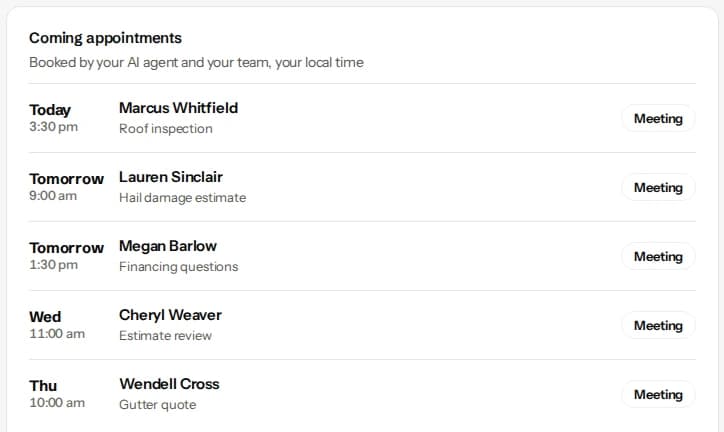
The second thing is that your people are on roofs, not at desks. Anything that needs an estimator to log in and update a field at the end of an inspection will not get done, because at the end of an inspection they are driving to the next one. What works is a system that fills itself in from the call, the text and the booking, and asks the office to type as little as possible.
The third is the storm. A general CRM assumes leads arrive at a steady pace. Yours arrive in a wall, and a system that is fine at ten calls a day has to be fine at a hundred, all at once, without anyone in the office picking up a phone to make that happen.




 Multiply Revenue