
Three Reasons Outbound Stalls, and What Each One Actually Is
Nobody sets out to run a bad outbound operation. It stalls in three specific places, and each one has a different fix, which is why throwing a better closer at it rarely changes anything.
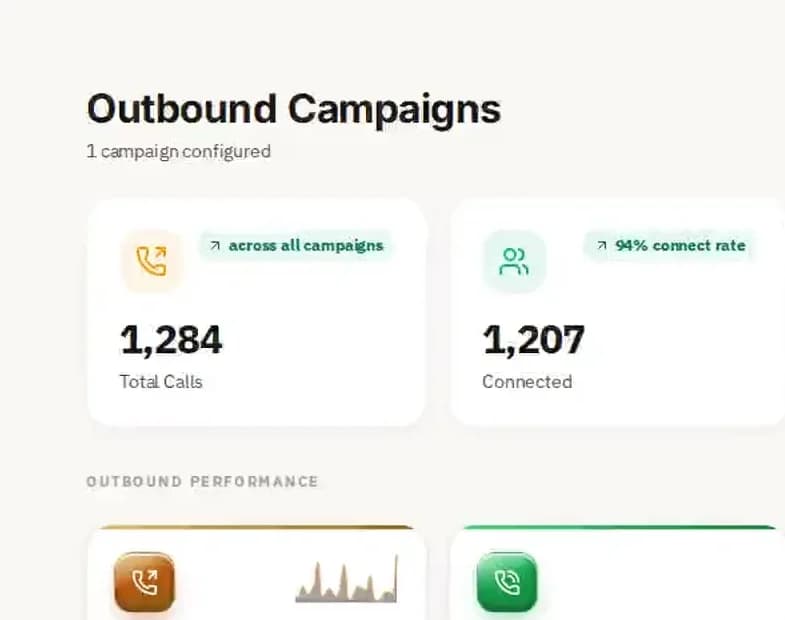
The window closes in minutes, not days. When somebody fills in a form, searches for your service or clicks an ad, they are in the market for a short stretch and then they are not. Your team is in a meeting, on another call or not watching the queue, and that is not a discipline problem. No human team can watch every channel around the clock. The agent watches the signals continuously and dials within minutes of one appearing, which is the whole of the advantage. It is not a better pitch. It is being first to the conversation.
Follow-up stops around the second attempt. Ask any sales manager and they will tell you the same thing: most reps give up after two tries. The prospect did not answer, maybe they were not ready, there is another lead waiting. Most deals need considerably more contact than that before anything happens.
Your team does not have the hours, the patience or the incentive to try a dozen times over a long cycle, and the ones who do are the exception you cannot hire at scale. The agent keeps going for as long as the sequence says, weekly or monthly or whenever a signal appears, and it adds nothing to anybody's calendar.
Your reps are doing admin instead of selling. A Salesforce study (State of Sales, 6th edition) found sales representatives spend 28% of their time actually selling. The rest goes on logging calls, researching prospects, scheduling follow-ups, writing emails and sitting in internal meetings. You are paying a full salary for data entry. The agent handles the research, the dialing, the transcript, the scheduling and the confirmation sends, which leaves your people on the part that needs a person: the complicated negotiation and the relationship that closes a large account.

















 Multiply Revenue